

If you are convicted of state drug charges, you may be eligible for some measure of leniency. The outcome is quite different for federal charges. Even a first-time conviction for drug trafficking can bring severe legal repercussions.

The fact is, federal prosecutors and judges are serious about drug crimes. It’s time that you get serious about your legal defense, too. If you were charged in Syracuse or elsewhere in upstate New York, contact Carden Dotzler Hammond, PLLC.

Mandatory Minimums For First-Time Offenders

Many criminal defendants incorrectly view the state and criminal courts as largely the same. When they hear of state courts giving plea bargains, sending the defendant to diversionary programs, and probation, they assume the same basic system operates at the federal level.

This is not true, however, with respect to most federal drug trafficking charges. A conviction of trafficking drugs will result in the judge imposing certain mandatory minimums. These are called “mandatory” because the judge must sentence at least the minimum statutory amount.

The exact sentence will depend on such factors as:

  • The type of drug you trafficked (which federal Schedule it falls under)
  • The quantity of the drug
  • Whether you have a prior criminal record

Importantly, your prior record will affect the ceiling (maximum) of your sentence, but not your minimum. In other words, you should not expect leniency even for a first-time trafficking conviction.

Case Examples of Federal Sentencing

It helps to consider a couple of specific examples of federal drug trafficking convictions, both from the high and low ends of sentencing, to better appreciate the possible outcome of your case. A Syracuse federal crime defense attorney can advise as to your specific situation.

Heroin, 100 to 999 grams

If you are convicted for the first time of trafficking this Schedule I drug in the above quantity range, and there was no personal injury or death associated with your activity, you can expect a sentence of:

  • At least 5 years but not more than 40 years in prison
  • A fine of up to $5 million

However, if there was a personal injury or death tied to your trafficking, you can expect 20 years to life in prison plus the fine. As you might expect, the consequences get even more serious for a second-time conviction or if the amount of heroin is 1 kilogram or more.

Most Schedule IV drugs

These include drugs like Xanax, Ambien, and Valium. A person may assume that because they are less serious than the higher schedules of drugs, the consequences are minor. But a first-time conviction of trafficking Schedule IV drugs will likely lead to:

  • Up to 5 years in federal prison
  • A fine of not more than $250,000

For most Schedule IV drugs, the amount that is trafficked does not matter. For the drug Flunitrazepam, the baseline amount is one gram and trafficking this or any amount over this will mean up to 20 years in prison (for non-violent cases) and a fine of $1 million.

Options for First-Time Offenders

First-time offenders who qualify for the so-called safety valve (codified in the U.S. Code) may be able to avoid a mandatory minimum sentence, although they will still serve time. To qualify they have to meet all five of the following criteria:

  • Having a limited criminal history
  • The absence of violence or weapons (in anyone’s possession) used in the trafficking
  • No death or serious injury resulting from the trafficking (an overdose may count)
  • Not being a leader or organizer of the trafficking operation
  • Full cooperation with the government

These are difficult criteria to meet, although your Syracuse federal crime defense lawyer can review the facts and determine whether you may be able to invoke the safety valve. If so, the judge has the option to sentence you to less time in prison than the mandatory minimum.

Comprehensive Legal Defense for Your Trafficking Case

Whether you qualify for the safety valve or not, you need seasoned legal defense in your corner. Judges and prosecutors are unforgiving, and you will face the most severe consequences without representation. That’s where CDH Law comes in.

If you have been charged with trafficking drugs in Syracuse or upstate New York, connect with us today. You can give us a call or fill out our online contact form to get started.
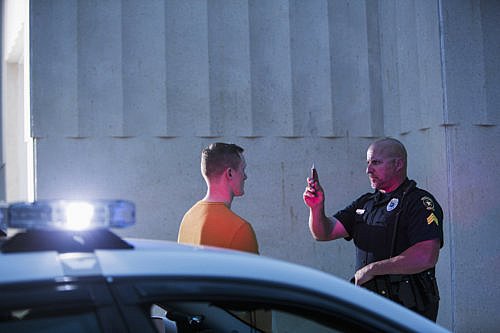
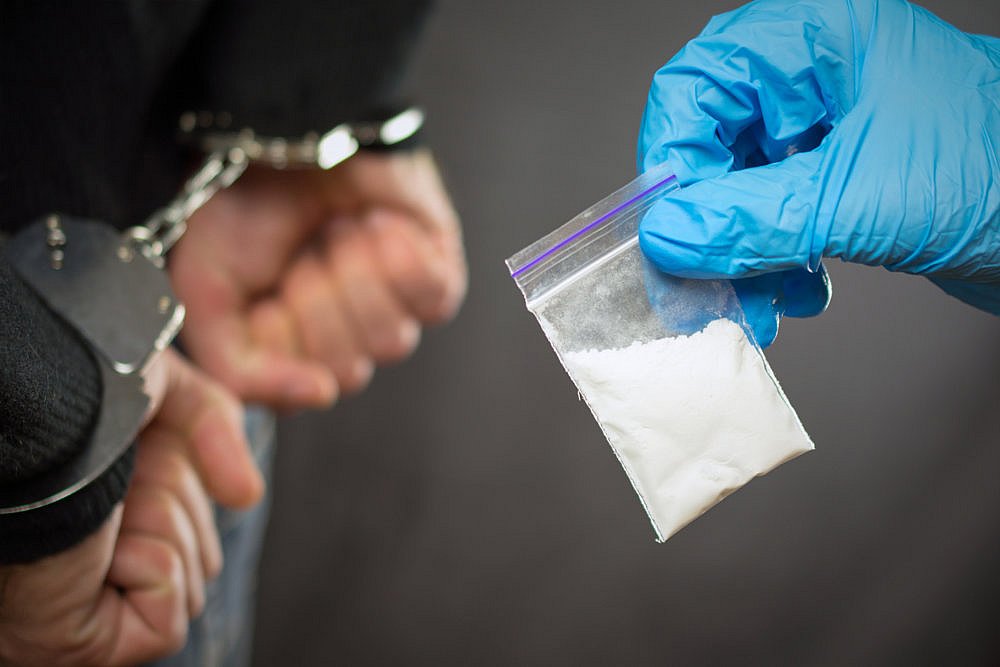
A drug possession charge varies in severity depending on a number of different factors.  Certain drugs considered to be more dangerous will likely come with more severe penalties. Larger quantities of the drug will likely result in heightened charges. While the penalties will vary in severity depending on the specifics, all drug charges should be taken seriously. A conviction could mean fines and jail time as well as a mark on your criminal record.

New York Drug Possession Charges and Defenses

There is a wide range of drug possession charges and, as stated above, the charge you face will vary depending on things like:

  • Which drug was involved?
  • How much of the drug was involved?
  • Was there any evidence of an intent to sell the drugs?
  • Was there any evidence that the drug was being sold?
  • Were there firearms present when the drugs were found?
  • Do you have any prior convictions? Do you have any prior felony convictions?

In order to successfully bring a case against someone for a drug possession charge, prosecutors carry the burden of proving every single element beyond a reasonable doubt. This means that prosecutors must prove:

  • The substance was a controlled substance;
  • The defendant was in possession of the controlled substance;
  • The defendant was knowingly in possession of the controlled substance; and
  • The possession of the controlled substance was unlawful.

There are, of course, further details and complexities in each of these elements. For instance, possession means that the defendant either had actual or constructive possession of the controlled substance. Actual possession means that the drugs were found on the person. Constructive possession means that the drugs were not necessarily on the person, but the person was in a position to exercise control over the drugs or the area in which the drugs were found.

A common defense strategy when someone is facing a drug possession charge is to undermine one or more elements that the prosecutor has to prove. The defense team can either disprove an element or undermine the validity of the element. An example may be disproving the prosecutor’s allegation that the possession of the controlled substance was unlawful. A person may have been in possession of marijuana but may have had a valid prescription for the drug. Medical marijuana can be prescribed to patients with qualifying conditions such as cancer, Parkinson’s disease, epilepsy, HIV, and other conditions where there is a need to manage chronic pain.

A drug charge may also be fought by claiming that there was an illegal search and seizure. The Fourth Amendment of the U.S. Constitution prohibits police officers from conducting unreasonable searches and seizures. That is why law enforcement officers are required to follow a certain protocol when searching suspects for evidence of a crime being committed. If there was no probable cause for your arrest or your constitutional rights were violated in any way, it could lead to crucial evidence being thrown out or the charges themselves being thrown out.

New York Drug Charge Defense Attorneys

Drug charges are all too common, but that does not mean you should dismiss them as no big deal. A conviction for a drug charge comes with serious and lasting consequences. That is why the dedicated criminal defense attorneys at CDH Law are relentless in fighting for our clients. Contact us today.

New York is well known as having some of the strictest, harshest drug laws in the United States. While the laws regarding the making, sale, and distribution of drugs are complex, New York has made it clear that those convicted of these kinds of charges will face serious consequences. Extended prison sentences and heavy fines await those convicted of the distribution or manufacturing of drugs. This kind of criminal charge will follow you long after your fines have been paid and your time has been served. It will follow you on job searches and housing applications. It is difficult to escape the stigma of a person with a drug conviction on his or her record.

Drug Charges: Drug Distribution, Trafficking, and Manufacturing Offenses

There are five degrees or categories of the crime of sale of a controlled substance. The degree will vary based on things like the amount of the controlled substance and the type of controlled substance at issue. To secure a conviction for the sale of a controlled substance, a prosecutor must be able to prove that the defendant unlawfully sold the controlled substance and knew that it was a controlled substance. There must have been intent to transfer the substance, but the prosecutor does not need to prove that the defendant knew the specific amount of controlled substance that was sold. The prosecutor also does not need to prove that the defendant ever had physical possession of the controlled substance. Additionally, there is usually no need to prove that the actual delivery of the controlled substance occurred. Agreeing or even an offer to sell the controlled substance may very well suffice to secure a conviction.

When the sale of a controlled substance involves at least $75,000 worth of the controlled substance or you sell this amount of the controlled substance on one or more occasions within six months, you may be facing drug trafficking charges. Under the New York penal code, drug trafficking is considered to be a major felony, a Class A-1 felony offense. Maximum potential penalties for this kind of offense may even include life imprisonment.

In addition to the sale and distribution of drugs, New York also considers drug manufacturing to be an extremely serious offense. Drug manufacturing involves the use of chemical processes to create a controlled substance that runs in violation of the law. The majority of drug manufacturing charges are classified as felonies. Those convicted of felony drug crimes in New York are usually not eligible for alternate sentencing. This means that things like drug treatment or rehabilitation in place of time in prison are usually not offered to defendants convicted of drug crimes of this nature. The severity of the sentence imposed on a defendant convicted of these kinds of drug crimes will depend on things like the controlled substance involved, the amount of controlled substance involved, and the criminal history of the defendant.

New York Drug Charge Defense Attorney

You do not want to go up against the New York criminal justice system alone, especially when you are facing a drug charge. The State of New York is tough on these kinds of crimes and the sentences handed down reflect this. CDH Law is prepared to mount the most rigorous defense possible to help you fight these charges. Contact us today.